Food Safety Magazine

USDA

Development of a Rapid Method for Enumerating Specific Types of Bacteria

An enormous amount of research has been conducted with regard to detecting pathogenic bacteria; however, in many cases, pathogenic bacterial counts may be more appropriate.

Food Lab Accreditation Takes Off With FDA, USDA Support

For a lab to receive accreditation, it must be able to prove to an accrediting body that its tests are applicable, appropriate and functioning correctly.

Food Safety’s New Regulatory Reality: Are You Prepared?

With a flurry of changes and new food safety regulations on the horizon, companies have the opportunity to discover more efficient and effective methods of consumer protection.
 

Radlo Foods Hatches a High-Tech Egg Safety Plan

Radlo Foods describes their innovative approach to egg safety.

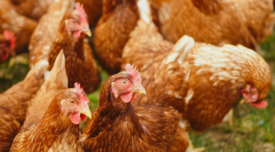
Does Animal Welfare Affect Food Safety?

Regardless of the method of raising meat animals, dairy livestock or poultry, the greatest contributor to humane handling is management practices.

Training in an Integrated Food Safety System: Focus on Food Proteciton Officials

For training and certification to be successful, all food protection professionals must have a clearly defined skill set to do their jobs.

Current Issues in Raw and RTE Products

Listeria monocytogenes is clearly the foodborne illness-causing pathogen at the top of the RTE meat and poultry product manufacturer’s list of concerns.

The Interagency Risk Assessment Consortium: Improving Coordination Among Federal Agencies

Given the importance of risk assessment to public health decisions, food safety agencies have established mechanisms to engage the entire food industry on such issues.

Latest Trends in Meat Safety: How Will We Validate Meat Plant HACCP Systems?
Latest Trends in Meat Safety:  How Will We Validate Meat Plant HACCP Systems?

Transparency among regulatory bodies, scientists and industry will continue to be of paramount importance as food safety controls and HACCP systems evolve for meat safety.

Beating Listeria: Specialty Brands’ Aggressive Approach
Beating <i>Listeria</i>:  Specialty Brands’ Aggressive Approach

A discussion is presented in Specialty Brands’ approach to combating Listeria in ready-to-eat meat and poultry products.

E. coli O157:H7 Intervention for Use at Retail Level
<i>E. coli</i> O157:H7 Intervention for Use at Retail Level

As E. coli O157:H7 emerged as a significant foodborne illness-causing pathogen, efforts were made to measure the incidence of this microorganism in raw ground beef and trimmings.

Meat Microbiology Trends: The Future is Now

An interview with Dr. William Brown, ABC Research Corp., looks at the latest innovations in food microbiology trends.

Challenges, Progress and Solutions in Produce Safety

Produce producers have witnessed a troubling and corresponding rise in microbial foodborne illness incidents associated with raw and minimally processed fruits and vegetables

Advances in Automated Rapid Methods for Enumerating E. coli
Advances in Automated Rapid Methods for Enumerating <i>E. coli</i>

Enumeration methods have improved dramatically in the past few years, becoming more rapid, more automated and more accurate.

Why Consumers Take Risks with Food Safety

Whenever foodborne outbreaks hit the news, the question always arises: Why don’t consumers take more care with handling and cooking their food?

Trends in Meat Safety: The Scientific Advantage

The food industry as a whole has invested hundreds of millions of dollars in food safety interventions that have directly resulted in lowered levels of microbial contamination on meat.

HACCP: A View to the Bottom Line

Hazard Analysis & Critical Control Points (HACCP) has emerged as the leading program for ensuring food safety.

BSE in the USA: The Madness Continues

The third article in a series taking a look at the threat of bovine spongiform encephalopathy to the food industry.

An Expert Stakeholder Survey on the Microbiological Safety of the U.S. Food Supply

Foodborne disease continues to be of major concern to public health officials, food manufacturers, academic researchers and consumer protection groups worldwide.

Recent Ozone Applications in Food Processing and Sanitation

Ozone may be viewed as advantageous over other chemical sanitizers used in the food industry for sanitation purposes.

More Results: