Process control in food safety describes engagement with processes, procedures, and practices that help monitor and ensure the safety and quality of food during production and processing.
Packaging food safety concerns include the materials of construction for packaging and all food contact surfaces, as well as the labeling information on the packaging.
An important part of a food safety plan, process validation is the process of gathering information on how to produce food products safely and applying that knowledge to food manufacturing procedures.
ExxonMobil has published a case study that showcases its recent collaboration with plant-based foods provider Bonduelle and packaging manufacturer Constantia Drukpol to develop a recyclable, non-laminated freezer film that meets both sustainability goals and the rigorous demands of freezer packaging.
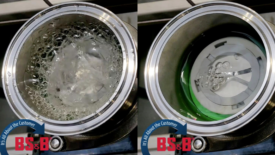
To increase equipment safety and reliability, novel rupture disk technology from B&B Safety Systems activates at a set burst pressure, but can “breathe” to relieve minor pressure fluctuations.
Positive release programs are designed to ensure that any food product that is produced meets all quality, safety, sanitation, microbiological, and legal requirements before it is shipped.
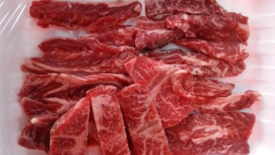
An Auburn University researcher has been awarded a patent for a color-changing sticker that goes on packaging and indicates when a meat product has spoiled.
In evaluating the thousands of existing PFAS compounds and at what level they present a risk to the health of humans and animals, FDA, USDA, CPSC, and EPA are focusing on three issues: bioaccumulation, persistence, and toxicity.
Ruskin® recently announced the BTD830 bubble tight isolation damper, which meets the AMCA 500-D standard and is ideal for applications where extremely low leakage is required, such as in food processing.
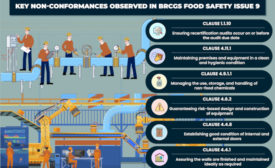
The event discussed how after a year of launching the BRCGS Global Standard Food Safety Issue 9, the transition audit data collected over this period was analyzed to comprehend the common non-conformities and trends, and how sites can overcome these challenges in future audits.
The Penn State Extension is offering two educational events for the food industry in April 2024: a free webinar on April 9 about third-party audits for dairy processors, and an in-person workshop on April 29 in Pennsylvania about small-scale commercial canning.
On Demand:This webinar will focus on how to eliminate the risk of costly plant shutdowns and system failures due to improper selection and installation of electrical conduit systems.
On Demand:Join quality experts in the food and beverage industry to learn how digitally enabled quality management enables organizations to deliver superior quality, reducing cost and brand risk.
On Demand: From this webinar, attendees will gain insight into identifying and controlling common foreign object considerations and hazard pairs within food processing and foodservice environments.
On Demand: In this webinar, technical experts will explain what a system breach is, how to manage and reduce system breaches, and how to design breaches out of a system to help prevent pathogen contamination in dry and low-moisture environments.
 Subscribe